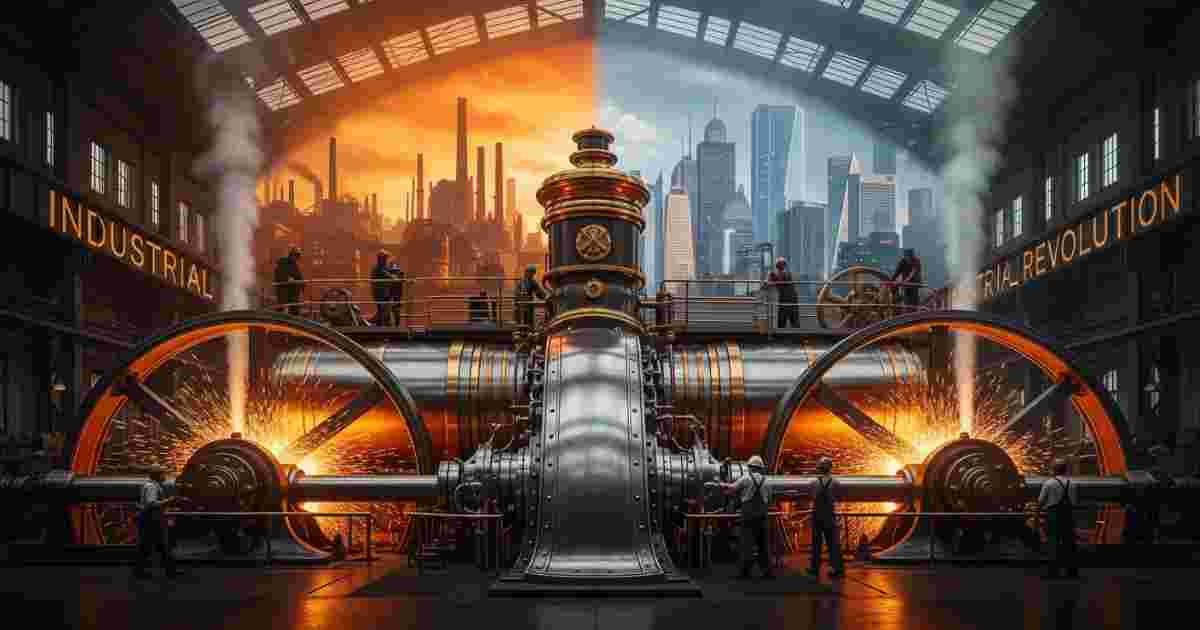

Hello, young learners! I am H. L. Morgan from Universityscope.com. I love helping students like you understand big ideas in simple ways. Today, we will learn about the Industrial Revolution. This was a time when the world changed fast. People moved from using hand tools to big power machines. This shift made life easier but also brought new challenges.
Many students ask: “What invention started the Industrial Revolution?” It is not just one thing. But the steam engine by James Watt is often seen as the key spark. It helped power machines in factories. Later, inventions like Henry Bessemer’s steel process made strong materials for more machines. We will focus on the move from hand work to machine power. Let’s dive in! and Read This Article also What Is the Greatest Invention of All Time? 25 Inventions That Changed the World
Table of Contents
What Was the Industrial Revolution?
The Industrial Revolution started in Britain around 1760. It lasted until about 1840. Then it spread to other countries like the United States.
Before this, people made things by hand. They used tools like hammers or spinning wheels at home. Farms used animals or water wheels for power. Work was slow and hard.
The revolution brought factories with big machines. These machines ran on steam or coal. Goods like cloth and tools were made faster and cheaper. Cities grew as people left farms for factory jobs.
This change helped the world grow. But it also caused problems like dirty air and long work hours for kids.
what invention started the industrial revolution : James Watt’s Steam Engine
Now, let’s answer: What invention started the Industrial Revolution? Many say it was the steam engine improved by James Watt.
James Watt was a Scottish engineer. In 1769, he made a better steam engine. Earlier engines by Thomas Newcomen wasted a lot of steam. Watt added a separate condenser. This saved fuel and made the engine stronger.
His invention used less coal but gave more power. Watt worked with Matthew Boulton to build these engines. By 1800, hundreds were in use.
The James Watt invention (steam engine) powered pumps in mines first. Then it ran machines in cotton mills. It turned wheels instead of just pumping up and down.
Imagine a big wheel turning day and night. No need for rivers or wind. Factories could be anywhere with coal.
How the Steam Engine Changed Everything
The steam engine started the shift from hand tools to power machinery.
- In textiles: Machines like the spinning jenny (by James Hargreaves) made thread fast. But steam powered bigger looms. Cloth production jumped.
- In mining: Steam pumps removed water from deep mines. More coal was dug up for fuel.
- In transport: Steam engines led to trains like George Stephenson’s Rocket in 1829. Goods moved quicker.
This transition meant more jobs in cities. But workers faced 12-hour days. Still, it made things like clothes cheaper for everyone.
Another Big Invention : Henry bessemer invention
Later in the 1800s, steel became important. Henry Bessemer, an English inventor, created the Bessemer process in 1856.
Before, steel was expensive and slow to make. Bessemer’s method blew air through hot iron to remove dirt. This made strong steel fast and cheap.
The Henry Bessemer invention (steel process) used a big converter like an egg-shaped pot. Air went in from the bottom. In 20 minutes, tons of steel were ready.
Steel built bridges, ships, and railways. It made the world stronger. Without it, tall buildings like skyscrapers would not exist.
The Shift from Hand Tools to Power Machinery
The big change was from hand to power.
Hand tools: People used muscle power. A weaver spun thread by hand. It took days for one shirt.
Power machinery: Steam engines drove belts and gears. One machine did the work of many people.
Here is a simple table to show the difference:
| Aspect | Hand Tools | Power Machinery |
|---|---|---|
| Speed | Slow, one item at a time | Fast, many items quickly |
| Power Source | Human or animal | Steam or coal |
| Location | Home or small workshop | Big factories |
| Cost | High for each item | Low, mass production |
| Examples | Hammer, loom by hand | Steam-powered loom, steel mill |
This shift helped economies grow. Britain became rich from exports. But it hurt small craftsmen who lost jobs.
Real example: In cotton mills, machines replaced hand spinners. Production rose 100 times!
Real Examples from History
Let’s look at real stories.
In 1771, Richard Arkwright built a water-powered factory. But steam made it better.
In the US, Eli Whitney’s cotton gin in 1793 cleaned cotton fast. It worked with steam later.
Bessemer’s steel helped build the Brooklyn Bridge in 1883. It used strong steel cables.
These machines built our modern world. Trains, cars, and planes all started here.
Quick Summary
The Industrial Revolution changed how we make things. The steam engine by James Watt started the big shift to power machines. Henry Bessemer’s steel process made materials stronger. From hand tools to factories, life got faster. But remember, it brought good and bad changes. As students, learn from history to make a better future.
FAQs for Students
What invention started the Industrial Revolution?
Many point to James Watt’s steam engine in 1769. It powered the first big machines.
What was James Watt’s invention?
James Watt invented an improved steam engine with a separate condenser. It saved energy and drove factories.
What was Henry Bessemer’s invention?
Henry Bessemer invented a process to make cheap steel by blowing air through molten iron in 1856.
How did machines change work?
Machines made work faster but moved it to factories. People left farms for city jobs.
Why is this important for my studies?
Understanding this helps in history, science, and career choices like engineering.
For more guides, visit Universityscope.com. Keep learning!