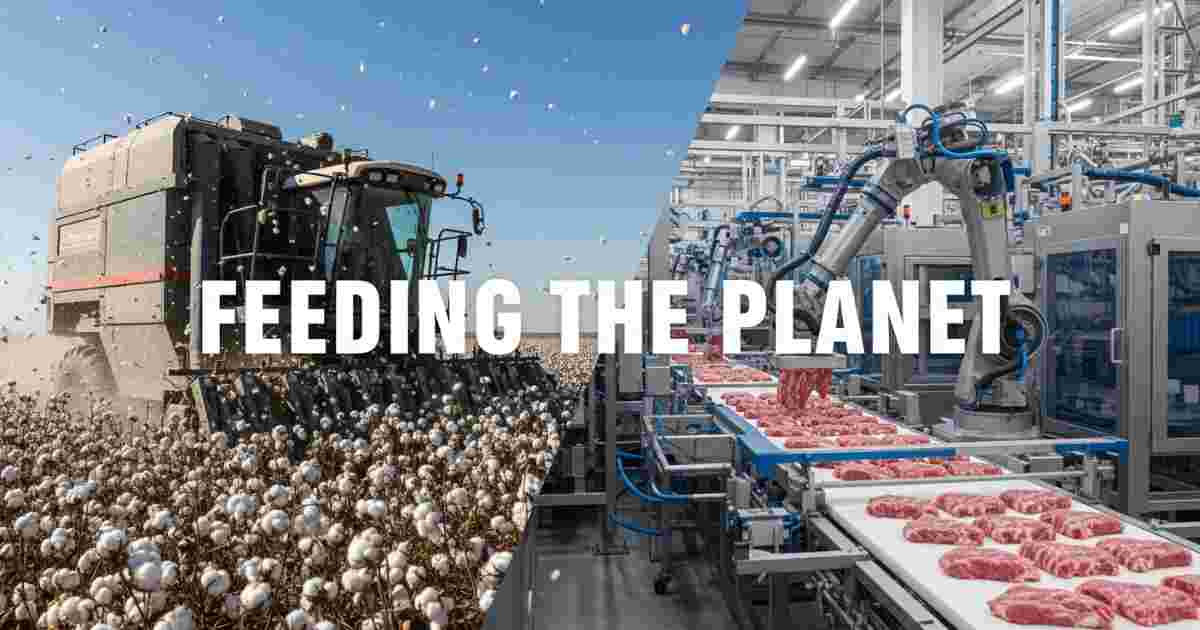

Hello, young learners! I am H. L. Morgan from Universityscope.com. I love helping students like you understand how history shapes our world. Today, we will talk about how inventions changed agriculture and food logistics. This means how we grow and move food to feed people.
Many students ask about the cotton gin invention. It was made by Eli Whitney. It changed farming a lot. Then, we will see how other inventions helped the meat industry. One big question is: Which invention was most important in revolutionizing the meat industry? We will answer that too. Let’s learn in simple steps! and Read This Article also What Is the Greatest Invention of All Time? 25 Inventions That Changed the World
Table of Contents
What Is the Cotton Gin Invention?
The cotton gin is a machine that separates cotton seeds from the soft fibers. Before this, people did it by hand. It was slow and hard.
Eli Whitney made the cotton gin in 1793. He got a patent in 1794. The machine had wire teeth on a wooden cylinder. When you turn it, the teeth pull the fibers through small slots. Seeds stay behind. A brush cleans the fibers.
This invention made work faster. One person could clean 50 pounds of cotton in a day. By hand, it was only 1 pound.
Eli Whitney Invention: Who Was Eli Whitney?
Eli Whitney was born in 1765 in Massachusetts, USA. He went to Yale University. He was smart with machines.
In 1792, he visited a farm in Georgia. Farmers told him about the problem with cotton seeds. He made the cotton gin to help. But he did not make much money. Many people copied his idea without paying.
Eli Whitney also made other things. He helped with interchangeable parts for guns. This made factories better.
How the Cotton Gin Changed Agriculture
The cotton gin made cotton easy to grow and sell. Before, cotton was not a big crop. After, it became “King Cotton.”
- More production: US cotton went from 1.5 million pounds in 1790 to 18 million in 1800. By 1850, it was over 1 billion pounds.
- Bigger farms: Farmers grew more cotton. They needed more land. This spread farms in the South.
- Economic growth: Cotton became the top US export. It helped mills in the North and Europe make cloth.
- Sad side: It increased slavery. More cotton needed more workers to pick it. Slave numbers grew from 700,000 in 1790 to 3.2 million in 1850.
The cotton gin changed food production too. More land for cotton meant less for food crops like corn. But it showed how machines can make farming better.
Inventions That Changed Food Logistics
Agriculture is about growing food. Logistics is about moving it safely.
After the cotton gin, other inventions helped food. Like the mechanical reaper by Cyrus McCormick in 1831. It cut wheat fast. Tractors came later. They replaced horses.
For food like fruits and meat, keeping them fresh was hard. Before, meat was salted or canned. It did not taste good.
The Meat Industry Revolution
The meat industry changed in the 1800s. Cities grew. People needed more meat. But how to get it fresh from farms?
Big companies like Armour and Swift started in Chicago. They used new ways to kill and pack animals.
Which Invention Was Most Important in Revolutionizing the Meat Industry?
The answer is the refrigerator car. It is also called the refrigerated railcar.
This invention let people ship fresh meat long distances without it spoiling. Before, animals were sent alive by train. They lost weight and died. Now, meat could be killed in one place and sent cold.
William Davis made an early version in the 1860s. But Gustavus Swift made it better in the 1870s. He used ice and salt to keep it cool.
The refrigerator car changed everything.
- Central packing: Meat was packed in Chicago stockyards. Then sent to cities like New York.
- Lower costs: No need to feed animals on the way. Meat was cheaper.
- More jobs: Big factories hired many workers. But work was hard and dirty.
- Bigger market: Fresh meat went to more people. US meat production grew a lot.
Real example: In 1880, Swift sent the first refrigerated meat from Chicago to Boston. It worked! By 1900, Chicago packed 80% of US meat.
How These Inventions Changed Food Logistics
From cotton gin to refrigerator car, inventions made food easier to get.
Here is a simple table to show changes:
| Invention | What It Did | Impact on Farming and Food |
|---|---|---|
| Cotton Gin (1793) | Separated cotton seeds fast | Made cotton big crop. More farms, but more slavery. Less land for food? |
| Mechanical Reaper (1831) | Cut crops quickly | Faster harvest. More food like wheat. |
| Refrigerator Car (1870s) | Kept meat cold in trains | Fresh meat to cities. Big meat industry. Cheaper food. |
These helped feed more people. World population grew. But problems came too. Like bad work conditions in meat plants. Books like “The Jungle” by Upton Sinclair in 1906 showed this. It led to food safety laws.
Real story: In the US South, cotton farms took over. But in the Midwest, meat from cows and pigs fed the nation thanks to trains.
Quick Summary
Inventions like Eli Whitney’s cotton gin changed agriculture. It made cotton huge. Then, the refrigerator car revolutionized the meat industry. It made food logistics better. We can feed the planet easier now. But learn from history. Today, use tech for good farming.
FAQs for Students
What is the cotton gin invention?
The cotton gin is a machine by Eli Whitney. It cleans cotton fast.
What was Eli Whitney’s invention?
Eli Whitney invented the cotton gin in 1793. It helped farming grow.
Which invention was most important in revolutionizing the meat industry?
The refrigerator car. It let fresh meat travel far without spoiling.
How did inventions change food?
They made growing and moving food faster and cheaper. More people got fed.
Why study this for my career?
If you like farming or food business, know history. It helps in agriculture studies or jobs.
For more guides, visit Universityscope.com. Keep learning!