- Hey there! Before you dive into the full article, here is a quick and simple overview of what we are going to cover today:
- First, we'll explore what exactly is earth science?.
- We will also deep dive into topic 1: geology (the solid earth).
- You'll learn some interesting facts about 1. layers of the earth.
- Make sure not to miss the part where we discuss 2. plate tectonics (the giant puzzle).
- First, we'll explore 3. rocks and minerals.
- We will also deep dive into 4. fossils and earth history.

Have you ever looked up at the clouds and wondered why it rains? Have you ever picked up a cool-looking rock and wondered how it was made? Or maybe you’ve looked at the stars at night and thought about how big the universe is.
If you have asked these questions, you are already thinking like an Earth Scientist!
Earth Science is an amazing subject. It is basically detective work about our planet. It helps us understand everything around us, from the dirt beneath our feet to the air we breathe and the space beyond us.
Sometimes, science can feel complicated with big words. But don't worry. In this guide, we are going to break down the biggest earth science topics into a complete list with very easy explanations. We will use simple language, just like in a class 6th textbook, so everyone can understand.
Let’s dive into the amazing world of our planet!
Earth Science Topics for Students – Complete Guide
Table of Contents
What Exactly is Earth Science?
Before we look at the list, what is Earth Science?
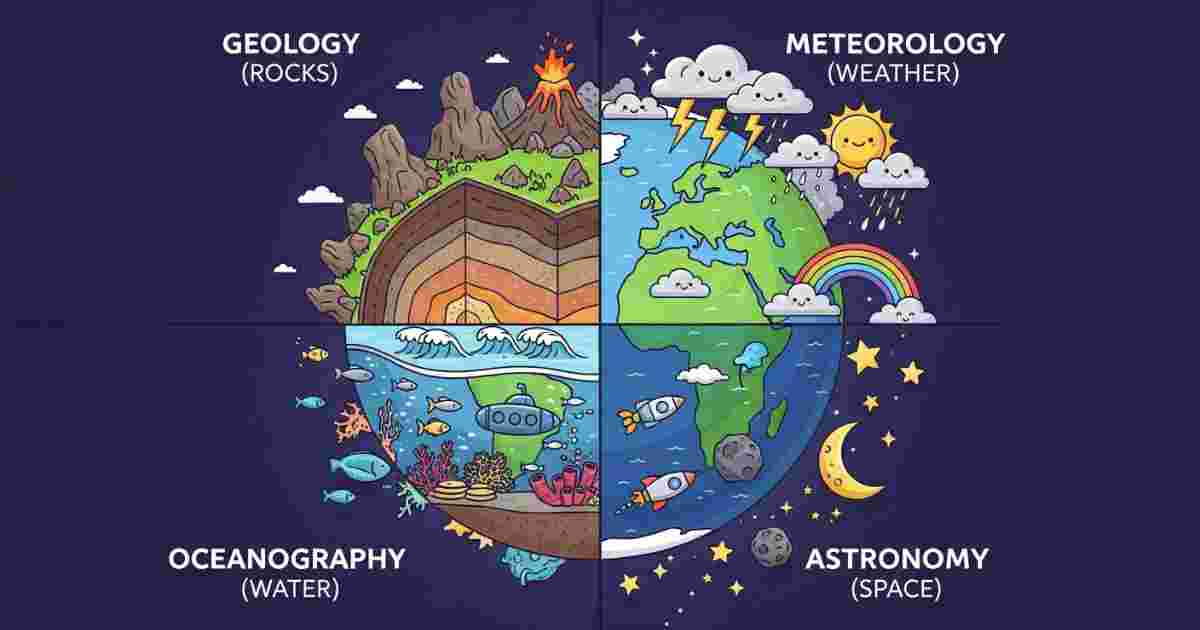
Put simply, Earth Science is the study of our home, Planet Earth, and its neighbors in space. Because Earth is so big and complex, scientists divide these earth science topics into four main "branches" or areas.
Think of it like a giant pizza cut into four big slices. Each slice is a different part of the Earth system.
Let’s explore these four main Earth Science Topics and the cool Explanation inside them.
Topic 1: Geology (The Solid Earth)
The word "Geo" means Earth. Geology is the study of the solid stuff Earth is made of. If you like digging in the dirt, collecting rocks, or learning about volcanoes, geology will be one of your favorite earth science topics.
Here are the key geology topics explained easily:
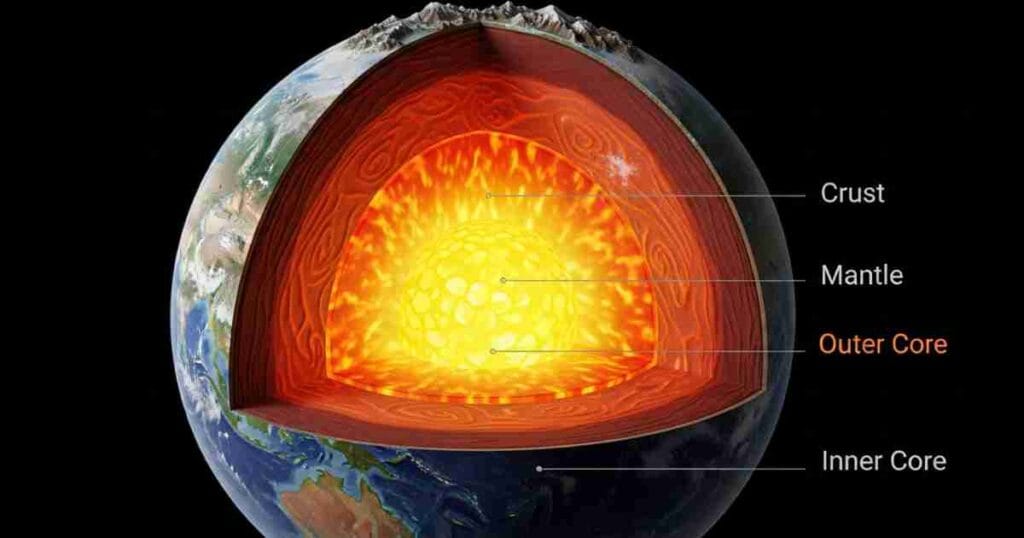
1. Layers of the Earth
Imagine Earth is like a peach. It has layers inside.
- The Crust: This is the skin of the peach. It is the thin outer layer where we live. It is made of solid rock.
- The Mantle: This is the thick, juicy part of the peach under the skin. It is super hot rock that is solid but can move very slowly like thick caramel.
- The Core: This is the pit or seed in the center. It is extremely hot and made mostly of metal (iron and nickel). It has a liquid outer part and a solid inner part.
2. Plate Tectonics (The Giant Puzzle)
The Earth's crust isn't one solid piece. It's broken into giant puzzle pieces called "tectonic plates." These plates are always moving, but very, very slowly—about as fast as your fingernails grow!
- When these plates crash together, pull apart, or slide past each other, amazing things happen.
- This movement is what causes earthquakes, builds tall mountains, and makes volcanoes erupt.
3. Rocks and Minerals
Rocks are everywhere! But did you know rocks fall into three main families based on how they are born? This is also important part in Earth Science Topics
- Igneous Rocks: These are "fire rocks." They form when hot melted rock (magma or lava) cools down and turns solid. Think of volcanoes. (Example: Granite).
- Sedimentary Rocks: These are "sandwich rocks." They form when layers of sand, mud, and small pebbles get squished together over a very long time. (Example: Sandstone).
- Metamorphic Rocks: These are "changing rocks." They start as one type of rock but change into a new type because of intense heat and pressure deep underground. (Example: Marble).
Minerals are the building blocks of rocks. A rock is usually made of two or more minerals mixed together.
4. Fossils and Earth History
How do we know what dinosaurs looked like? Fossils! Fossils are the remains or traces of ancient life preserved in rocks. Geologists use fossils to understand the history of Earth and how life has changed over millions of years.This is also related with Earth Science Topics
Topic 2: Meteorology (The Atmosphere and Weather)
What is the weather like outside right now? Is it sunny, cloudy, or rainy? Meteorology is the study of the air that surrounds our planet. This blanket of air is called the atmosphere.
This is one of the most useful earth science topics because weather affects what we wear and what we do every single day.
1. The Atmosphere (Our Blanket of Air)
The atmosphere is a mixture of gases that wraps around Earth. It keeps us warm and gives us oxygen to breathe. It also protects us from harmful rays from the Sun. Without the atmosphere, life on Earth wouldn't exist!
2. Weather vs. Climate
People often get these two mixed up, but they are different.
- Weather: This is what is happening outside right now or this week. Is it raining today? Is it hot? Weather changes quickly. Think of weather as the outfit you chose to wear today.
- Climate: This is the pattern of weather in an area over a very long time (like 30 years or more). Is a place usually hot and dry (like a desert climate) or cold and snowy (like a polar climate)? Think of climate as all the clothes in your closet.
3. The Water Cycle
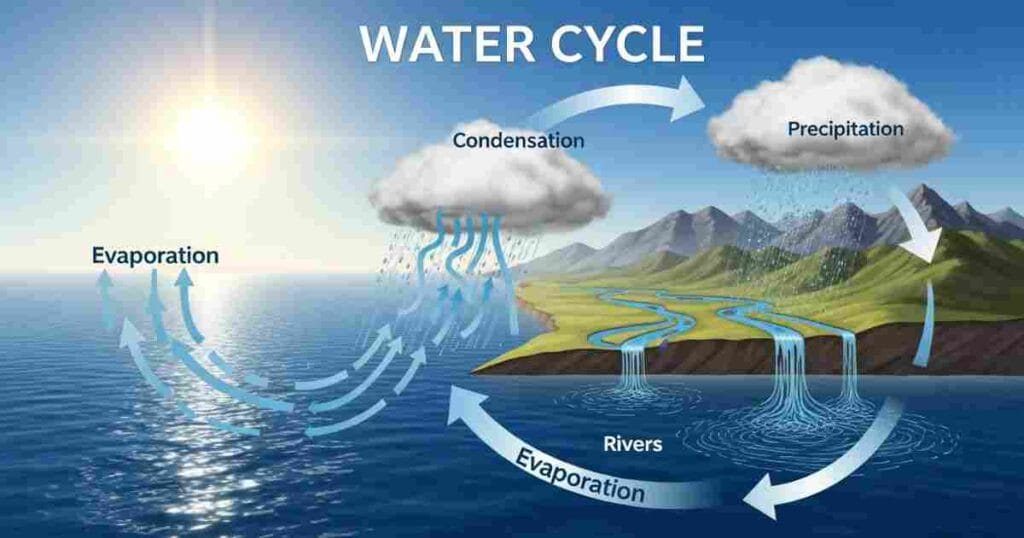
Water on Earth never goes away; it just moves around in a circle. This is one of the most important earth science topics.
- Evaporation: The sun heats up water in oceans and lakes, turning it into invisible vapor that floats up into the air.
- Condensation: As the vapor goes higher, it gets cold and turns back into tiny liquid water droplets. These droplets cluster together to form clouds.
- Precipitation: When clouds get too heavy with water, the water falls back to Earth as rain, snow, or hail.
4. Extreme Weather
Sometimes weather gets wild! Meteorology also studies storms like hurricanes, tornadoes, thunderstorms, and blizzards to help keep people safe.
Topic 3: Oceanography (The Water World)
Did you know that nearly 70% of our planet’s surface is covered by oceans? We should almost call our planet "Water" instead of "Earth"!
Oceanography is the study of the ocean. It is an exciting part of earth science topics because much of the deep ocean is still a mystery that hasn't been explored yet.
1. Ocean Water composition
Why can't we drink ocean water? Because it's salty! Oceanographers study what is dissolved in the water. Besides salt, ocean water contains gases like oxygen that fish need to breathe.
2. Ocean Currents
Imagine giant rivers flowing inside the ocean. These are called currents. Some currents are warm, and some are cold. They move warm water from the middle of the Earth near the equator toward the colder poles. These currents help control the temperature of our planet.
3. Waves and Tides
- Waves: Most waves you see at the beach are created by the wind blowing across the surface of the water.
- Tides: Tides are the regular rising and falling of the sea level every day. Tides are mostly caused by the gravitational pull of the Moon tugging on Earth's water.
4. The Ocean Floor
The bottom of the ocean isn't just flat sand. It has huge mountains, deep canyons, and volcanoes, just like on land! The deepest part of the ocean is much deeper than Mount Everest is tall.
Topic 4: Astronomy (Beyond the Earth)
Okay, this is the biggest slice! Astronomy is the study of everything outside of Earth’s atmosphere. It includes space, stars, planets, and the whole universe. It definitely belongs on our list of major earth science topics.
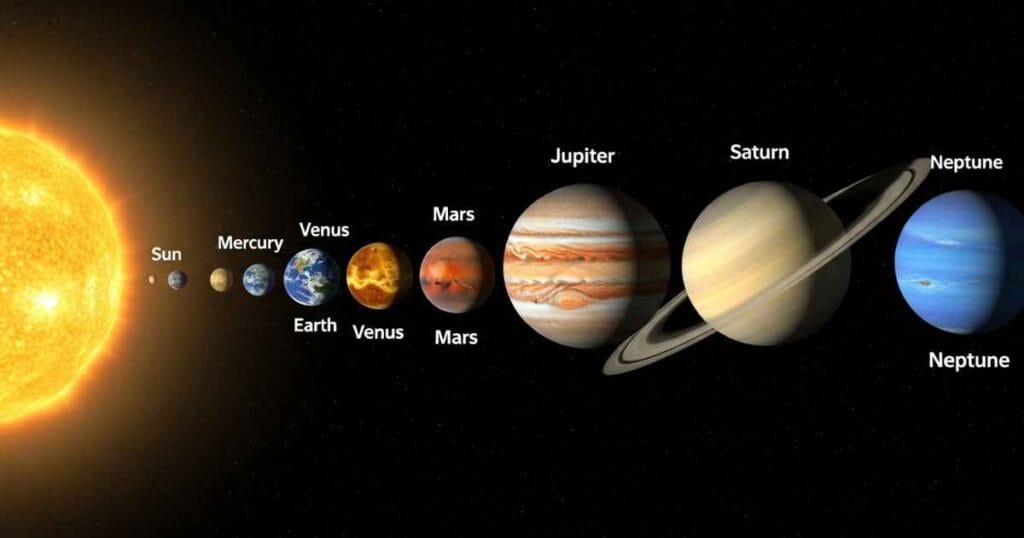
1. The Solar System (Our Neighborhood)
Our solar system is our local neighborhood in space. It consists of:
- The Sun: The star at the center. It gives us light and heat. It is huge compared to Earth.
- The Planets: There are eight main planets that orbit (travel around) the Sun. In order from the Sun, they are: Mercury, Venus, Earth, Mars, Jupiter, Saturn, Uranus, and Neptune.
- Other Objects: This includes moons orbiting planets, asteroids (space rocks), and comets (balls of ice and dust).
2. Stars and Galaxies
Our Sun is just one normal star. When you look up at night, you see countless other stars that are very, very far away. Stars are giant balls of burning gas.
Stars group together in huge collections called galaxies. Our solar system lives in a galaxy called the Milky Way.
3. The Earth-Moon-Sun System
The relationship between these three bodies is very important for life on Earth.
- Day and Night: Earth spins like a top. When your side of Earth faces the Sun, it's day. When it faces away, it's night.
- Seasons: Earth travels around the Sun once every year. Because Earth is tilted a little bit, different parts get more direct sunlight at different times of the year. This causes seasons like summer and winter.
- Phases of the Moon: The Moon travels around the Earth. Depending on where it is, we see different amounts of the Moon lit up by the Sun. This is why the Moon seems to change shape.
Why Study These Earth Science Topics?
Learning about these earth science topics isn't just for passing a test in school. It is important for every human being.
When we understand how Earth works, we can:
- Stay Safe: By understanding weather patterns and earthquakes, we can prepare for natural disasters.
- Protect Nature: Learning about oceans and the atmosphere helps us understand how to take better care of our environment and fight problems like pollution.
- Find Resources: We rely on the Earth for everything—water to drink, metals for our phones, and energy to power our homes. Geology helps us find these things responsibly.
Earth Science helps us appreciate the amazing, complex, and beautiful planet we call home. Keep asking questions, keep looking at the rocks, and keep looking up at the stars! For more visit universityscope.com