
This is a 8th article of Earth science Topics series in this article we discuss the following topics that are given below.
Chapter Overview
In this chapter, we will learn:
- The Leaning Earth: Why our planet does not stand up straight.
- The Reason for Seasons: Why it is hot in June but cold in December.
- The Longest Day: What happens during the Solstice and Equinox.
- Weather vs. Climate: The difference between your outfit and your wardrobe.
- The Greenhouse: How Earth keeps itself warm (and why it’s getting hotter).
Table of Contents
Introduction: Have you ever wondered why we wear shorts in July and heavy coats in January? Why doesn’t the weather stay the same all year round? The answer lies in a cosmic dance between the Earth and the Sun. It is a story of fire, ice, and a planet that likes to lean.
8.1 The Leaning Planet (The Tilt)
Here is the biggest secret about Earth: It is crooked.
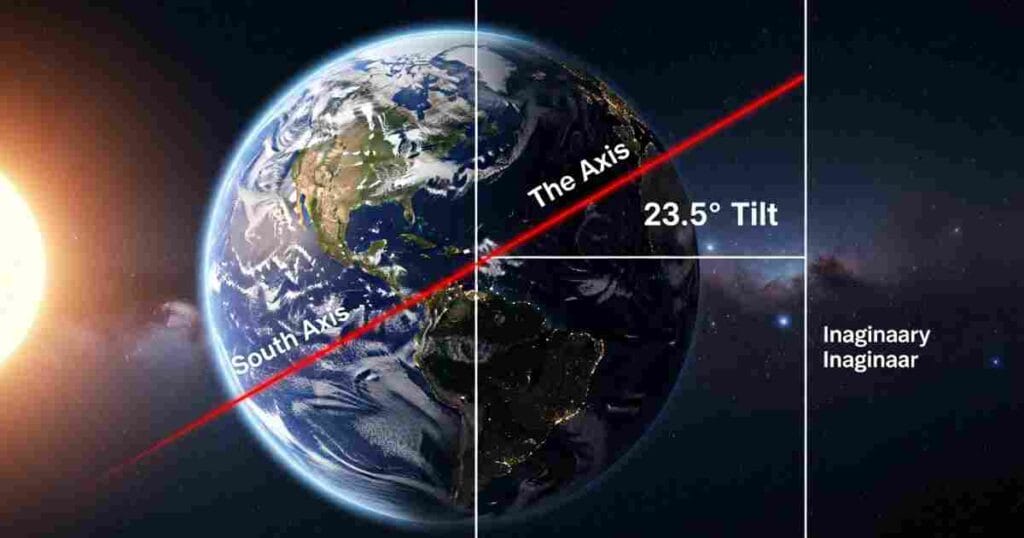
Imagine a spinning top on a table. Usually, it spins straight up. But Earth spins on a tilt.
Instead of standing straight up and down, Earth leans over at an angle of 23.5 degrees.
Why does this matter?
Because of this lean, the Sun does not hit the Earth evenly.
- Sometimes the top half (Northern Hemisphere) leans towards the Sun.
- Sometimes it leans away from the Sun.
8.2 The Journey Around the Sun
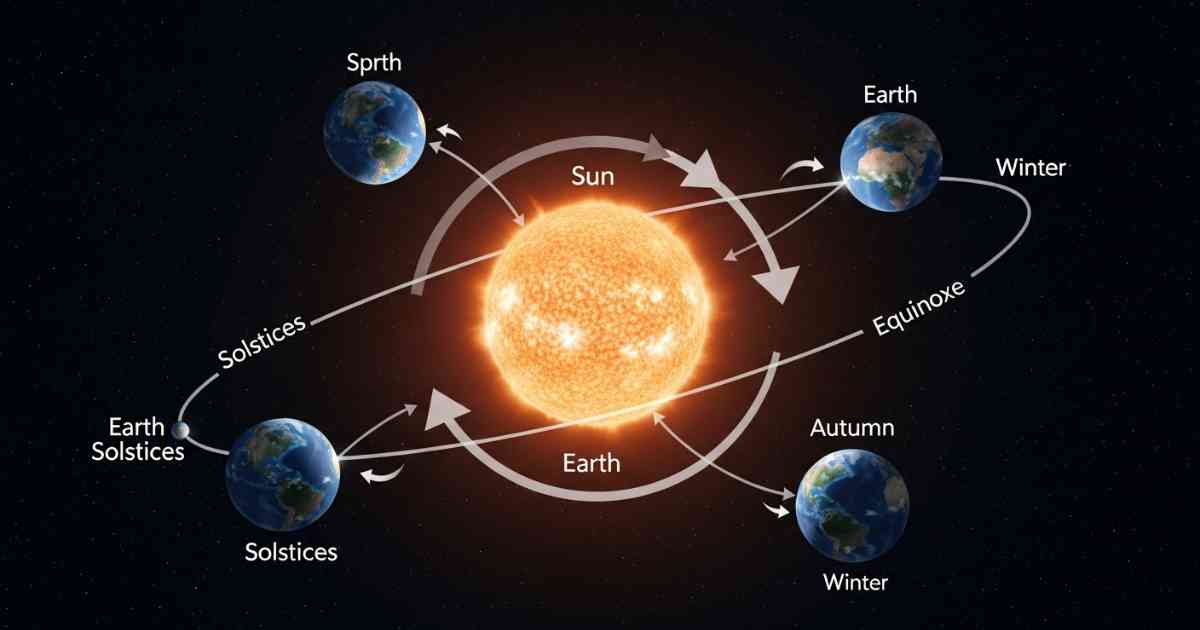
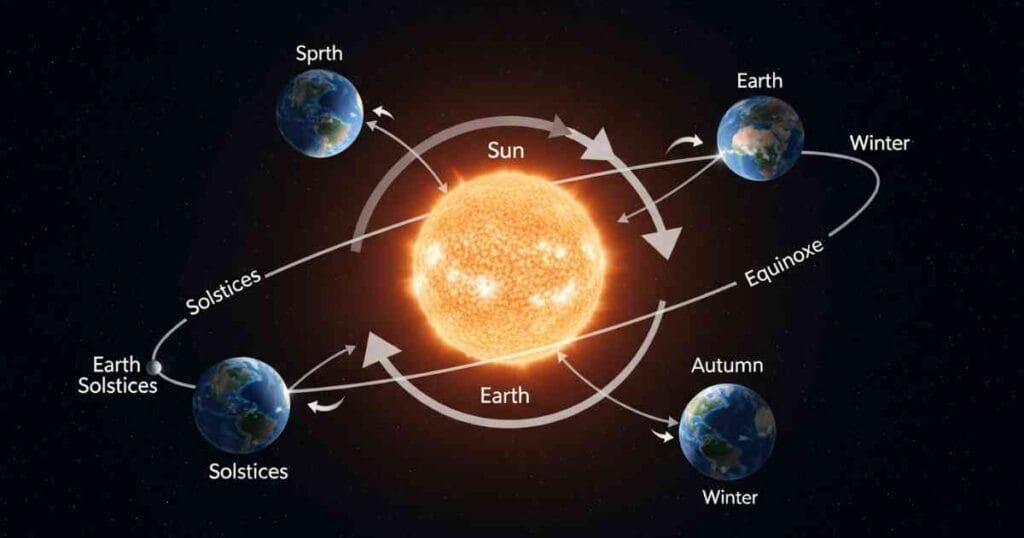
Earth is always moving. It travels around the Sun in a giant circle (Orbit). It takes 365 days (one year) to make one full trip.
Because Earth is tilted, different parts get different amounts of sunlight during the trip.
- Summer (The Fire): When the North Pole tilts towards the Sun, the sunlight hits us directly. It gets hot. Days are long.
- Winter (The Ice): When the North Pole tilts away from the Sun, the sunlight hits us at a slant. It gets weak and cold. Days are short.
8.3 The Longest and Shortest Days
During this journey, there are special days on the calendar.
1. The Solstice (The Extreme Days)
- Summer Solstice (June 21): The longest day of the year. The Sun is at its highest point.
- Winter Solstice (December 21): The shortest day of the year. It gets dark very early.
2. The Equinox (The Equal Days)
Twice a year (Spring and Fall), the Earth is not tilting toward or away from the Sun. It is sideways.
- Result: Day and Night are exactly equal length (12 hours each) everywhere on Earth.
8.4 Weather vs. Climate (What’s the Difference?)
People often get these two mixed up. Let’s make it simple.
Think of your clothes.
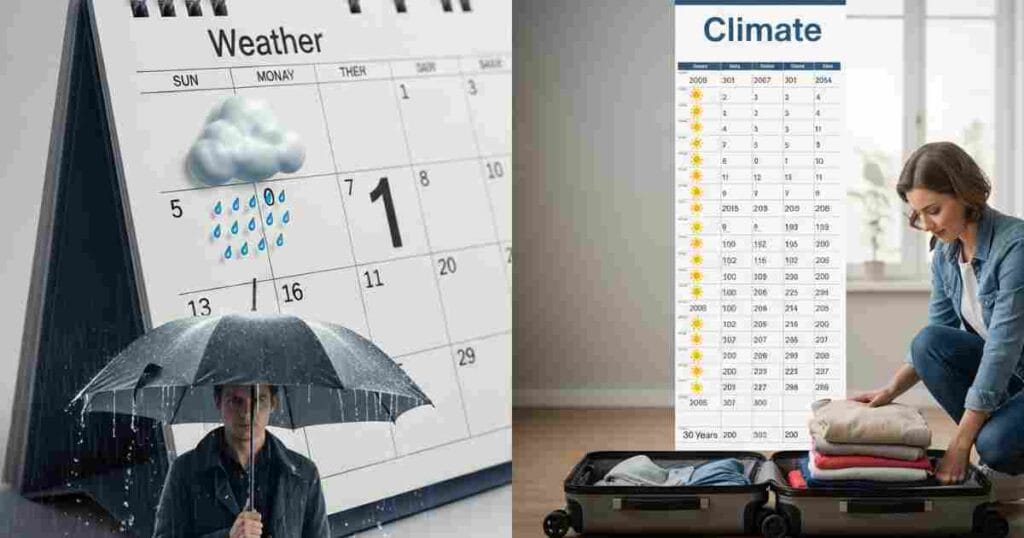
- Weather is your Outfit: You look out the window today. Is it raining? You wear a raincoat. Is it sunny? You wear a t-shirt. Weather changes every day.
- Climate is your Closet (Wardrobe): If you live in Hawaii, you have mostly shorts (Hot Climate). If you live in Alaska, you have mostly heavy coats (Cold Climate). Climate is the average weather over a long time.
Simple Rule:
- “It is raining today” = Weather.
- “It usually rains a lot in the jungle” = Climate
8.5 The Greenhouse Effect (The Blanket)
Earth is surrounded by a blanket of air. We learned in Chapter 7 that this atmosphere protects us. It also keeps us warm.
This is called the Greenhouse Effect.
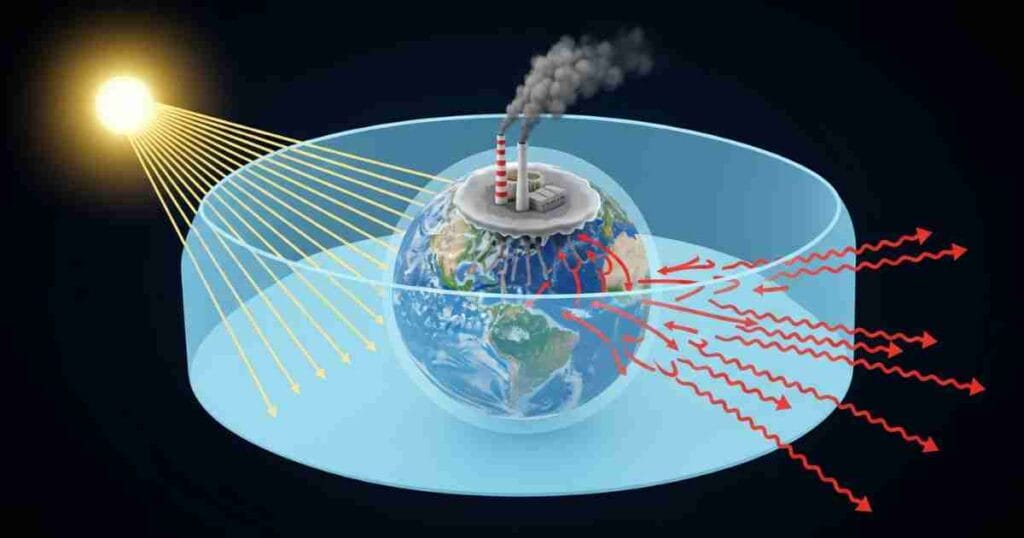
- Sunlight comes in through the atmosphere and warms the ground.
- Heat tries to float back out to space.
- Gases (like CO2) trap the heat, just like the glass roof of a greenhouse.
Is this bad?
No! Without this greenhouse blanket, Earth would be a frozen ball of ice. We need it to survive.
The Problem (Global Warming):
Humans are burning too much fuel (cars, factories). This adds too much “thick gas” to the blanket.
Imagine sleeping in summer with two heavy blankets. You get too hot.
Earth is putting on a second blanket, and that is why the climate is changing today.Shutterstock
8.6 Why This Chapter Is Important
The seasons and climate control everything we do.
- They tell farmers when to plant food.
- They tell birds when to fly south.
- They tell us how to build our houses.
Understanding the “Dance of Fire and Ice” helps us protect our home and keep the temperature just right.
Quick Revision Box
| Term | What is it? |
| Axis Tilt | Earth leans at 23.5 degrees. (The cause of seasons). |
| Orbit | Earth’s 365-day trip around the Sun. |
| Solstice | The longest or shortest day of the year. |
| Equinox | When day and night are equal length. |
| Weather | What is happening outside right now. |
| Climate | The average weather over many years. |
| Greenhouse Effect | How the atmosphere traps heat to keep us warm. |
Read our All Earth science series Article.
- Earth Science Topics Full Explanation – Complete Learning Series
- Article 1 :- Earth Explained Simply : How Our Blue Planet Works
- Article 2 :- How Earth Was Formed: The 4.6 Billion Year Story Explained in Simple Words
- Article 3 :- Why Earthquakes and Volcanoes Happen – Earth’s Moving Plates Explained
- Article 4 :- Rocks, Minerals, Gold & Diamonds – What Is Under Our Feet?
- Article 5 :- Fossils Explained – How Scientists Read Earth’s Past From Stones
- Article 6 :- Oceans, Rivers and the Water Cycle – The Life System of Earth
- Article 7 :- Weather and Atmosphere Explained – Clouds, Rain, Storms & Sky Science
- Article 8 :- Climate Change and Global Warming Explained in Easy Language
- Article 9 :- Solar System Explained – Earth’s Place in Space
- Article 10 :- Natural Resources, Pollution & How to Save Earth for the Future
Earth Science Topics – Full eBook
Complete and easy Earth Science book. Perfect for students and beginners.
Buy NowOne Line to Remember
“Seasons happen because Earth leans; Climate happens because Earth has a blanket—and we need to keep both in balance.”