
This is a 6th article of Earth science Topics series in this article we discuss the following topics that are given below.
It explores the one thing that makes Earth truly special: Water.
Chapter Overview
In this chapter, we will dive deep to discover:
- The Blue Marble: Why Earth looks blue from space.
- The Magic Loop: How water recycles itself forever (The Water Cycle).
- Salt vs. Fresh: Why you can’t drink 97% of the water on Earth.
- The Deep Dark: What lives at the bottom of the ocean where sunlight cannot reach.
- Rivers: How water travels from mountains to the sea.
Introduction: Take a glass of water and look at it. It looks simple, right? But that water is billions of years old. It might have been drunk by a dinosaur! Water is the most magical thing on Earth because it never disappears; it just changes shape. Let’s follow its journey.
Table of Contents
6.1 The Blue Planet
If you look at a map, what color do you see the most? Blue.
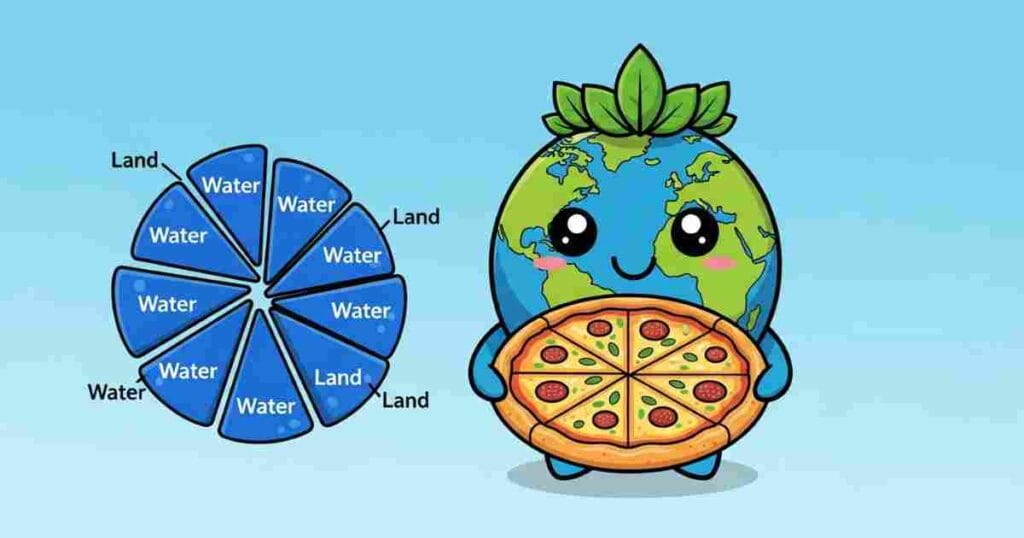
That is because 71% of Earth is covered in water.
Think of it this way:
If Earth was a pizza cut into 10 slices, 7 slices would be water, and only 3 slices would be land.
Because we live on the land, we forget how big the oceans really are. But the oceans are the “main event” on Earth. They control the weather, the temperature, and the life of the planet.
6.2 The Never-Ending Journey (The Water Cycle)
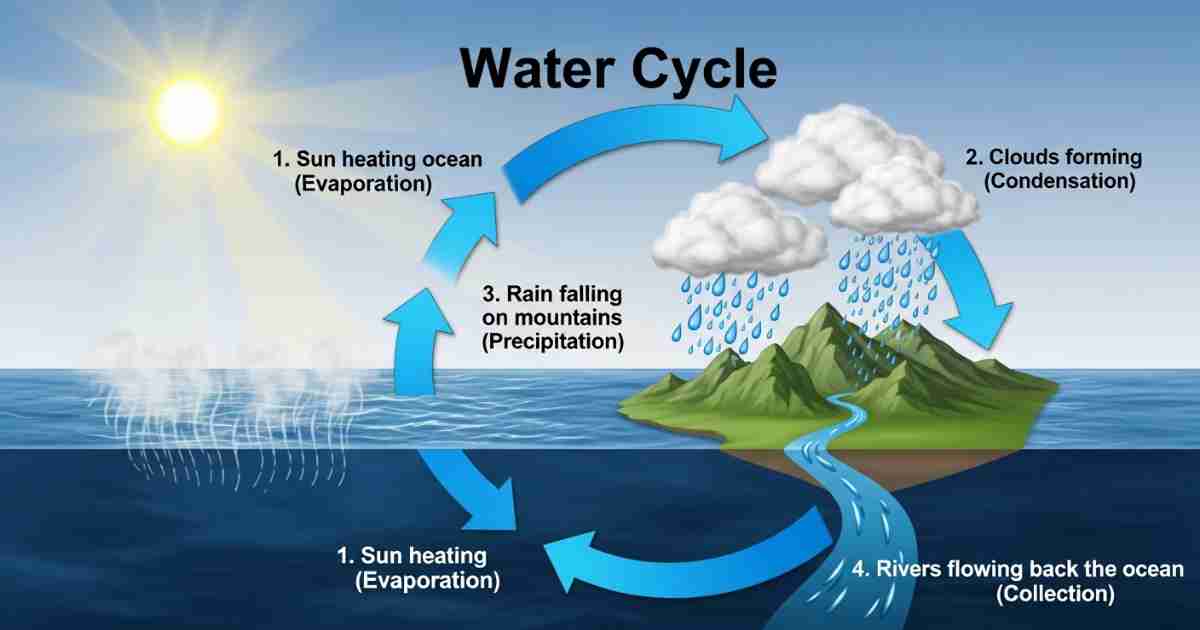
Earth is a giant recycling machine. It reuses the same water over and over again. This is called the Water Cycle.
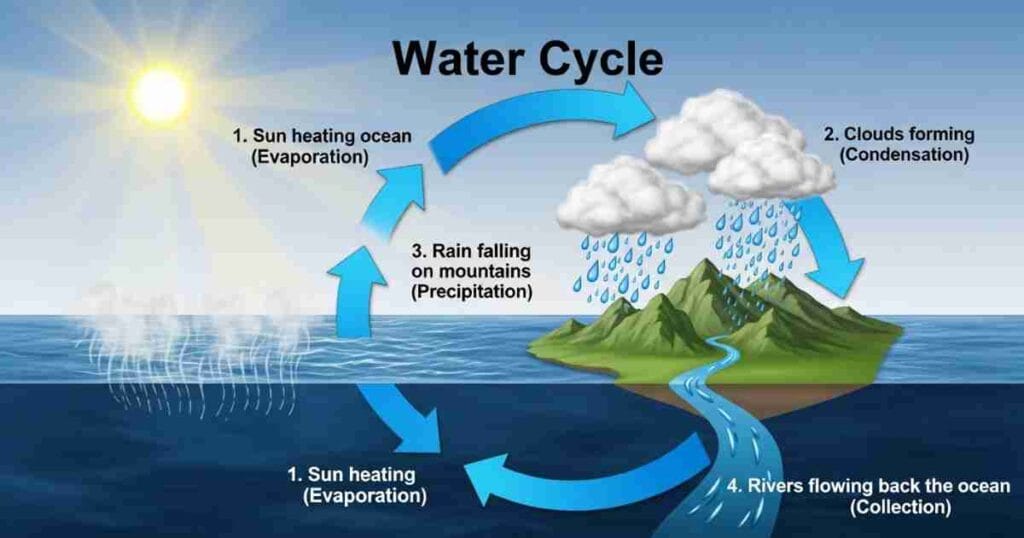
Here is how it works in 4 simple steps:
- Evaporation (The Vanishing Act): The Sun heats up the ocean. The water turns into an invisible gas (water vapor) and floats up into the sky.
- Condensation (Cloud Making): High up in the sky, the air is cold. The gas cools down and turns back into tiny water droplets. These droplets bunch together to make clouds.
- Precipitation (The Rain): When the clouds get too heavy and full of water, they burst. Water falls down as rain or snow.
- Collection (The Return): The rain creates rivers. The rivers flow back into the ocean. And the cycle starts all over again!
💧 Fun Fact: The water in your bottle today is the same water that rained down when T-Rex was alive. Earth does not make “new” water.
6.3 Salt Water vs. Fresh Water
If there is so much water on Earth, why do we need to save it?
Because most of it is undrinkable.
Imagine you have 100 cups of water.
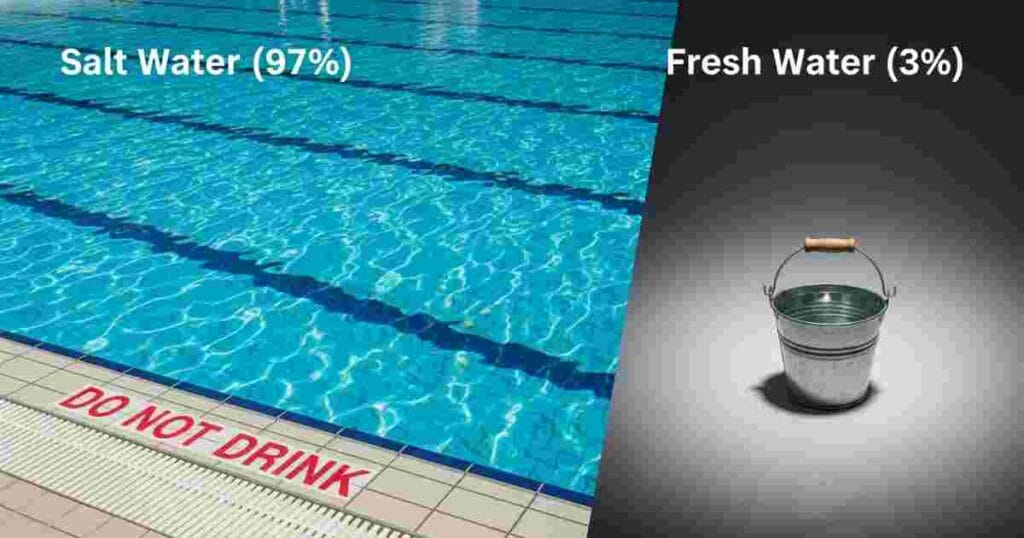
- 97 cups are Salty Ocean Water. (You cannot drink this).
- 2 cups are Frozen Ice (at the North and South Poles).
- Only 1 cup is Fresh Liquid Water (in rivers, lakes, and underground).
This means all the humans, animals, and plants on Earth have to share that tiny 1% of fresh water. That is why we must never waste it.
6.4 The Deep Dark Ocean (The Zones)
The ocean is not just a big swimming pool. It is deep. Very, very deep.
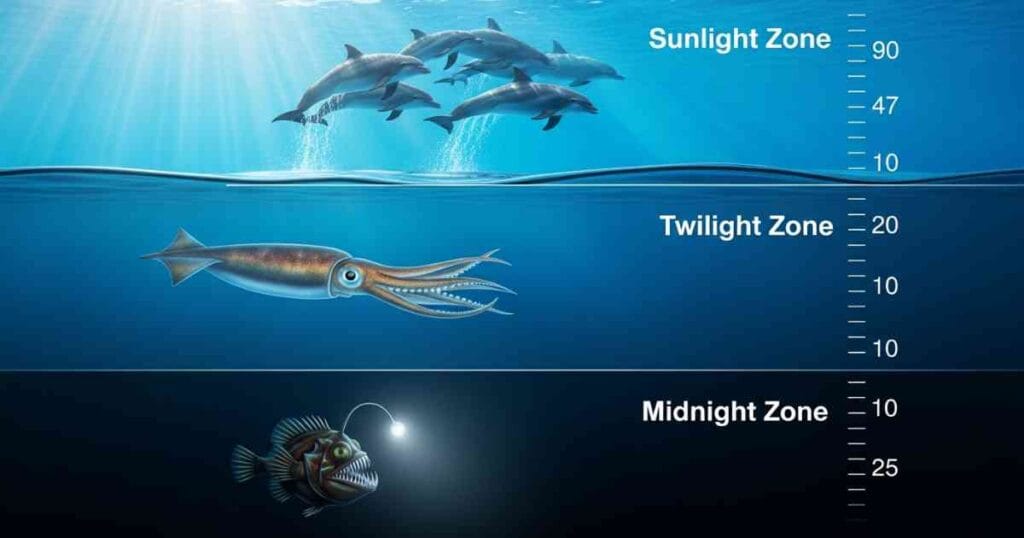
Scientists divide it into “Zones” (Layers):
- The Sunlight Zone (Top): This is where we swim. It is bright and warm. Most fish, sharks, and coral reefs live here because the sun can reach them.
- The Twilight Zone (Middle): As you go deeper, it gets darker and colder. Only weird creatures with big eyes live here.
- The Midnight Zone (Bottom): It is pitch black. No sunlight reaches here ever. The pressure is so strong it would crush a car. The animals here are strange—some even glow in the dark to see!
6.5 Rivers: The Earth’s Bloodstream
If the Ocean is the heart of the planet, Rivers are the veins.
Rivers act like a delivery system.
- They carry rainwater from the mountains down to the ocean.
- They carry nutrients (food for plants) across the land.
- They carve shapes into the earth (like the Grand Canyon!).
Without rivers, the land would dry up and die. They are the highways that move fresh water to where it is needed most.
6.6 Why This Chapter Is Important
Water is the only reason life exists on Earth.
If Earth was a little closer to the Sun, our water would boil away (like Venus).
If Earth was a little further away, our water would freeze (like Mars).
We are lucky to be on the Blue Jewel where water flows freely.
Quick Revision Box
| Term | What is it? |
|---|---|
| Hydrosphere | All the water on Earth (Oceans, Lakes, Rivers). |
| Evaporation | Water turning into gas (steam) due to heat. |
| Condensation | Gas turning back into liquid (clouds). |
| Precipitation | Water falling from the sky (Rain/Snow). |
| Salt Water | 97% of Earth’s water (Oceans). |
| Fresh Water | 3% of Earth’s water (Rivers, Ice, Lakes). |
One Line to Remember
“Earth is a giant recycling machine that uses the same water over and over again to keep us alive.”
Read our All Earth science series Article.
- Earth Science Topics Full Explanation – Complete Learning Series
- Article 1 :- Earth Explained Simply : How Our Blue Planet Works
- Article 2 :- How Earth Was Formed: The 4.6 Billion Year Story Explained in Simple Words
- Article 3 :- Why Earthquakes and Volcanoes Happen – Earth’s Moving Plates Explained
- Article 4 :- Rocks, Minerals, Gold & Diamonds – What Is Under Our Feet?
- Article 5 :- Fossils Explained – How Scientists Read Earth’s Past From Stones
- Article 6 :- Oceans, Rivers and the Water Cycle – The Life System of Earth
- Article 7 :- Weather and Atmosphere Explained – Clouds, Rain, Storms & Sky Science
- Article 8 :- Climate Change and Global Warming Explained in Easy Language
- Article 9 :- Solar System Explained – Earth’s Place in Space
- Article 10 :- Natural Resources, Pollution & How to Save Earth for the Future
Earth Science Topics – Full eBook
Complete and easy Earth Science book. Perfect for students and beginners.
Buy Now