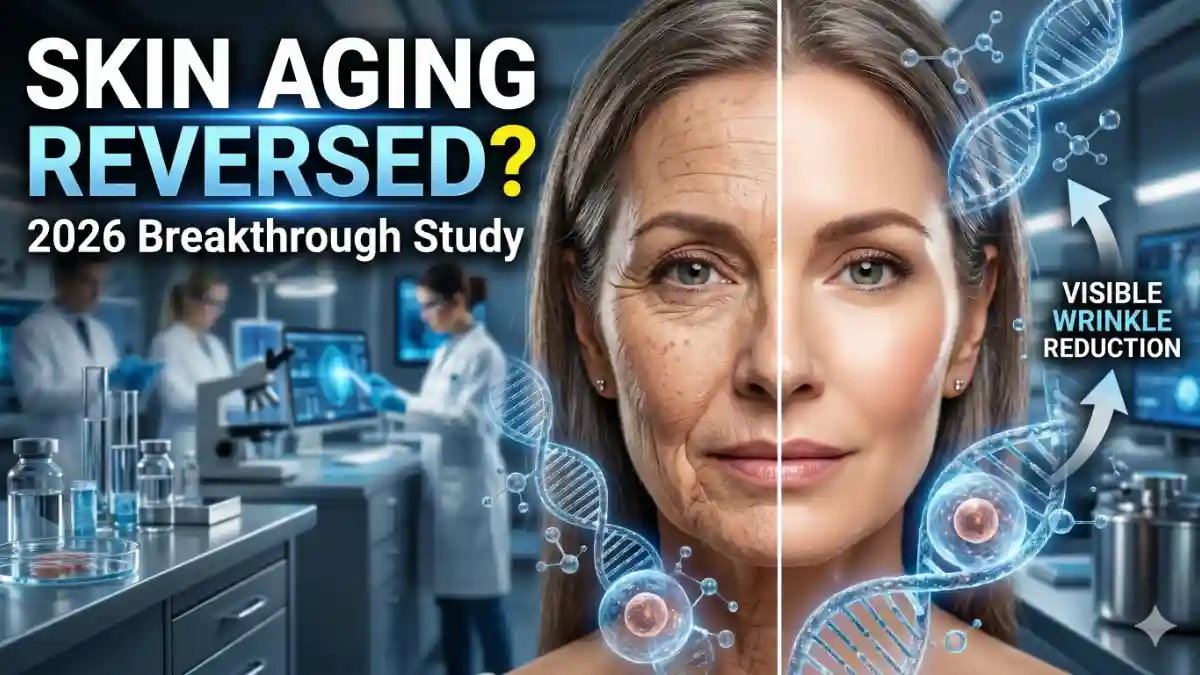

A new study published in Dermatology and Therapy claims that skin aging may be reversible at the biological level.
Researchers found that aging in human skin is strongly linked to changes in DNA methylation, a process that affects how genes work over time. The study says these aging patterns appear across different ethnic groups, even when skin looks different on the surface.
That part matters. Because it suggests skin aging follows a shared biological process in humans, regardless of skin tone or ethnicity.
Table of Contents
What the study found
The clinical trial included 60 participants who applied a topical treatment containing dihydromyricetin (DHM) for 8 weeks.
Researchers reported:
- Reduced biological skin age
- Less visible wrinkles
- Better skin texture
- Improved skin density
The treatment appeared to affect the skin at the epigenetic level, meaning it may change how aging-related genes behave.
What is DNA methylation?
DNA methylation is a natural process that controls gene activity. As people age, these methylation patterns change. Some genes become less active, while others become overactive.
Scientists believe this process plays a major role in:
- Skin aging
- Loss of elasticity
- Wrinkle formation
- Cellular decline
The new research points to these methylation changes as one of the main drivers behind visible skin aging.
How DHM works
According to the study, DHM works by blocking an enzyme called DNMT1.
DNMT1 is involved in maintaining DNA methylation patterns. By slowing this enzyme down, researchers think DHM may help restore more youthful genetic activity in skin cells.
That’s very different from regular anti-aging creams that mostly focus on hydration or temporary cosmetic effects.
This approach targets the biological process itself.
Why researchers are paying attention
Anti-aging skincare usually works on the surface:
- Moisturizing the skin
- Filling fine lines
- Improving appearance temporarily
Epigenetic therapies try to change what’s happening inside the cells.
Researchers say this could open the door to treatments that affect how skin ages biologically, instead of simply covering the signs of aging.
The study is still early, and scientists will likely need larger clinical trials before these treatments become common. But the findings are getting attention because they move beyond cosmetic skincare into gene-level aging research.





Thanks for sharing! Free Video Generator has over 100,000 users and is trusted for creating UGC-style ad videos, product demos, and social content. The quality is surprisingly professional.